01
Determine Your Temperature Requirement
The operating temperature is the most critical selection factor.
| Temperature Range | Recommended Type | Notes |
|---|---|---|
| Up to 1200°C | Standard ED Type | Most economical option |
| 1200–1400°C | High-density ED Type | Enhanced oxidation resistance |
| 1400–1500°C | U-Shape or ED Type | Requires watt loading control |
| 1500–1600°C | Premium ED or W-Shape | Maximum temperature grade |
02
Choose the Element Shape
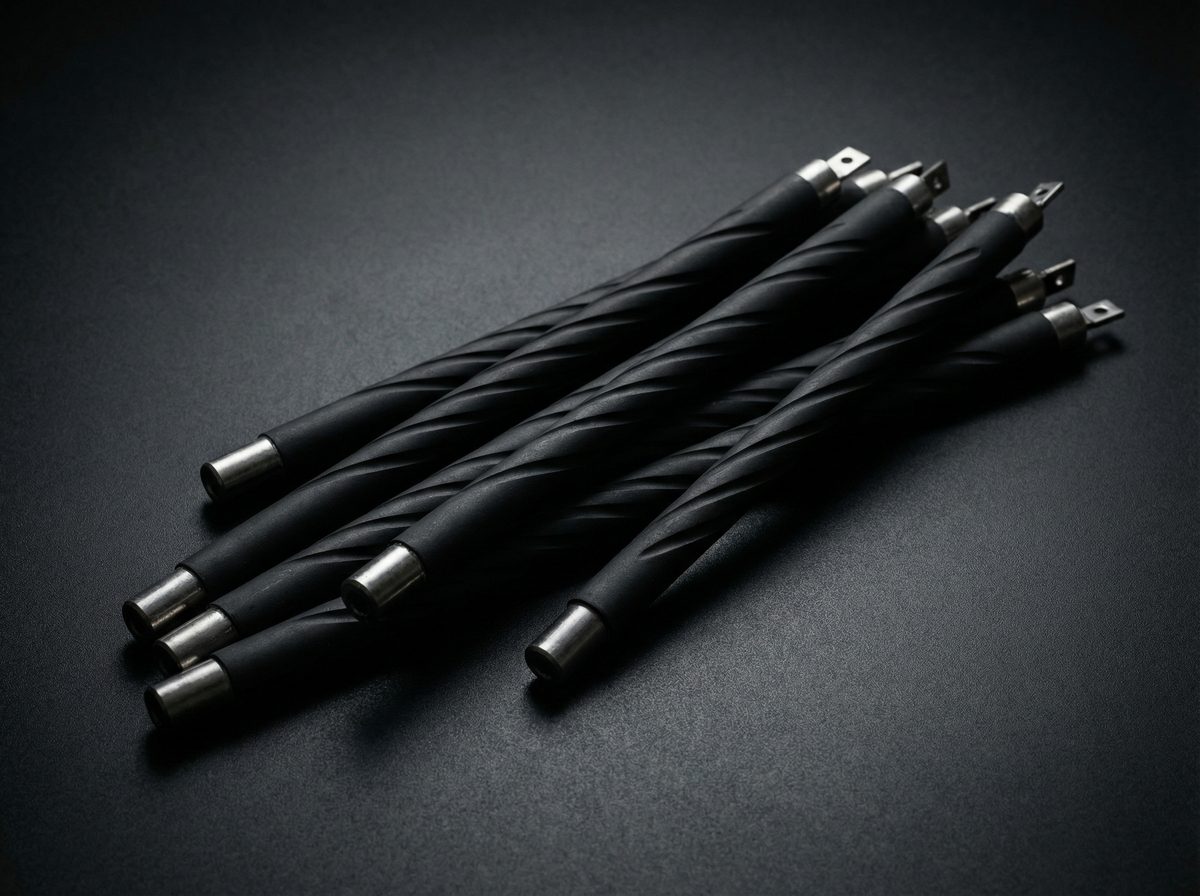
ED Type (Straight Rod)
- Both ends accessible
- Standard box/tube furnaces
- Tunnel kilns
- Most common choice
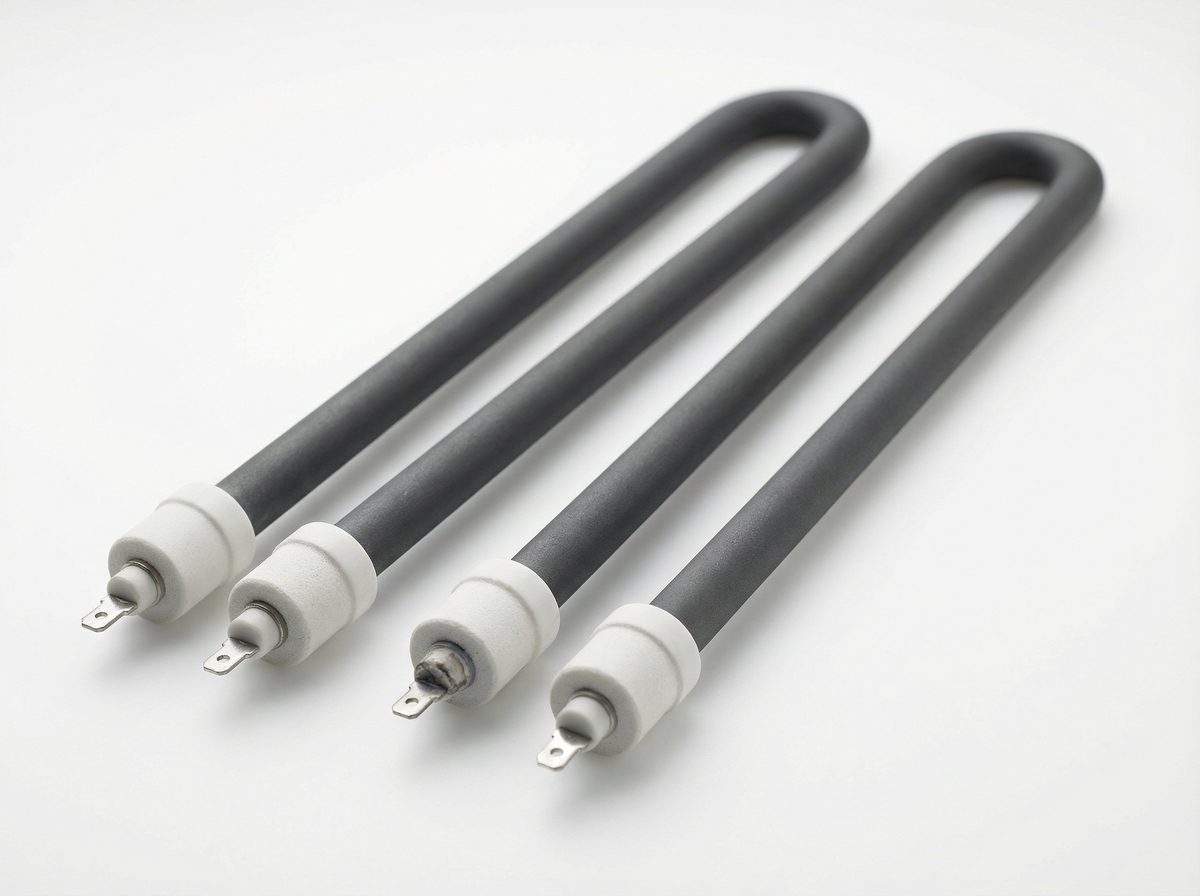
U-Shape
- Single-end access only
- Box furnaces
- Laboratory kilns
- Compact installation
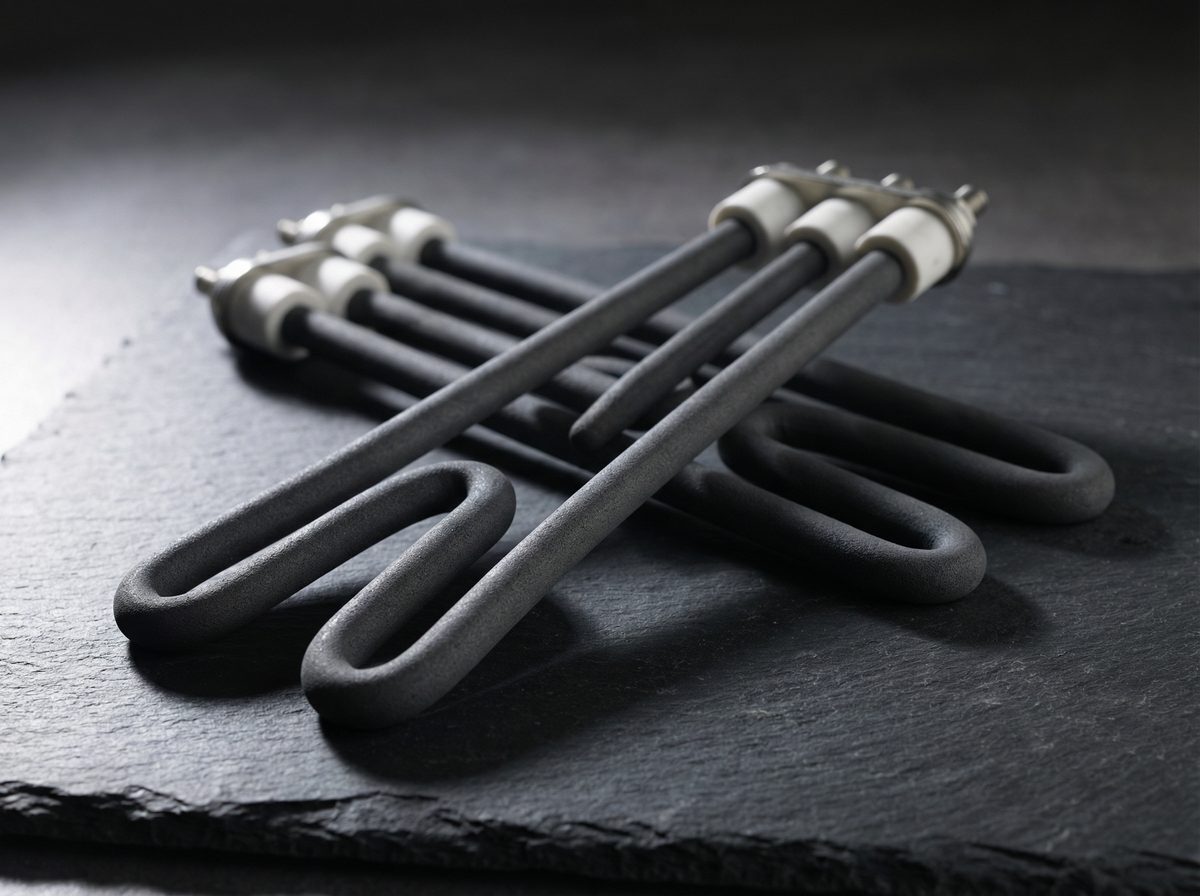
W-Shape
- 3-phase power supply
- Large industrial kilns
- High power requirements
- Metallurgical furnaces
03
Calculate Required Power
P (kW) = V × m × ΔT / (3600 × η)
V = furnace volume (m³), m = load mass (kg), ΔT = temperature rise (°C), η = efficiency (0.6–0.8)
| Furnace Size | Typical Power | Recommended Elements |
|---|---|---|
| Small lab (0.01 m³) | 1–3 kW | 2–4 pcs ED ø10mm |
| Medium box (0.1 m³) | 5–15 kW | 6–12 pcs ED ø16mm |
| Large industrial (1 m³) | 30–100 kW | W-Shape or multiple ED |
04
Specify Dimensions
- Furnace chamber width (determines hot zone length)
- Wall thickness (determines cold end length — minimum 150mm)
- Number of elements required
- Available voltage (110V, 220V, 380V, or custom)
- Atmosphere type (air, nitrogen, argon, hydrogen)
Not Sure Which to Choose?
Use our interactive Selection Assistant or contact Mr Pino directly for expert advice.